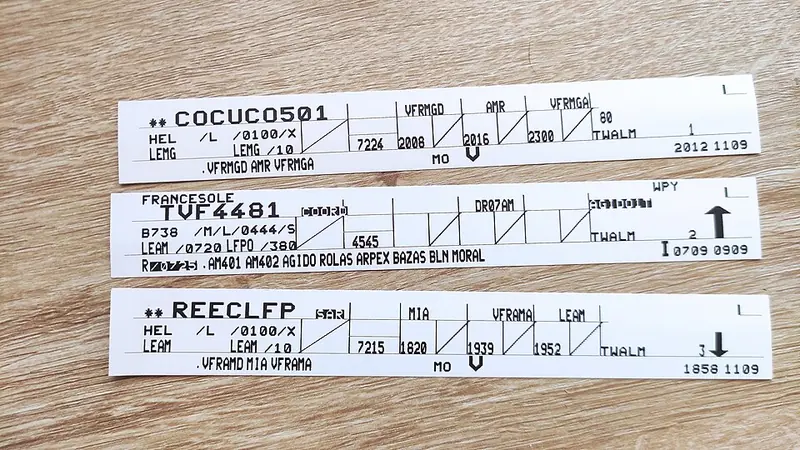
// Paper to electronic
Flight progress strips
Flight progress strips at Prestwick: from wartime movement boards to paper strips at the ADC and APC desks in the 1980s, the UK strip colours, and electronic strips.
What it is
- Each flight gets a strip that moves between bays on the board as it progresses. UK colours (CAP 493): buff = arrivals, blue = departures, pink = local, green = transit.
- Boards have a runway bay, and “LVP in force” strips can be displayed. Alternative (electronic) systems need CAA approval.
How controllers use it
- Example: a Ryanair arrival’s buff strip moves from the inbound bay into the runway bay when the aircraft is cleared to land.
- Retention: paper and electronic strips 30 days; the watch log 12 months.
UK rules and practice
- NATS EFPS (NAV CANADA EXCDS) started at Stansted in 2004, then Edinburgh, Aberdeen and Glasgow in 2010.
At Prestwick
- The strips on this page are generated from the site’s live ADS-B and ground data: buff for aircraft closing on Prestwick, blue for those leaving, green for nearby transits, and grey for aircraft on the ground at the field.
Typical UK practice: Whether Prestwick uses paper or electronic strips today is not public. atchistory photos show paper strips at the ADC/APC desks around 1984.
// Through the eras
| Era | Status | Notes |
|---|---|---|
| 1930s–40s | Typical UK practice | Chalk movement boards and log books are typical of RAF watch offices. |
| 1950s–60s | Typical UK practice | Paper strips in holders on a strip board are typical. |
| 1980s–90s | At Prestwick (sourced) | Photos from about 1984 show paper strips at Prestwick’s ADC and APC desks (atchistory). |
| Modern | Not known | Whether Prestwick uses paper or electronic strips today is not public; NATS towers moved to electronic strips from 2004. |
// Photographs